Chapter 82.
I’ve decided to post a few chapters of the new book from time to time.
Unedited, straight off the manuscript as it stands so they may or may not appear in the book when it gets published in Spring 2026. Here is chapter 82.
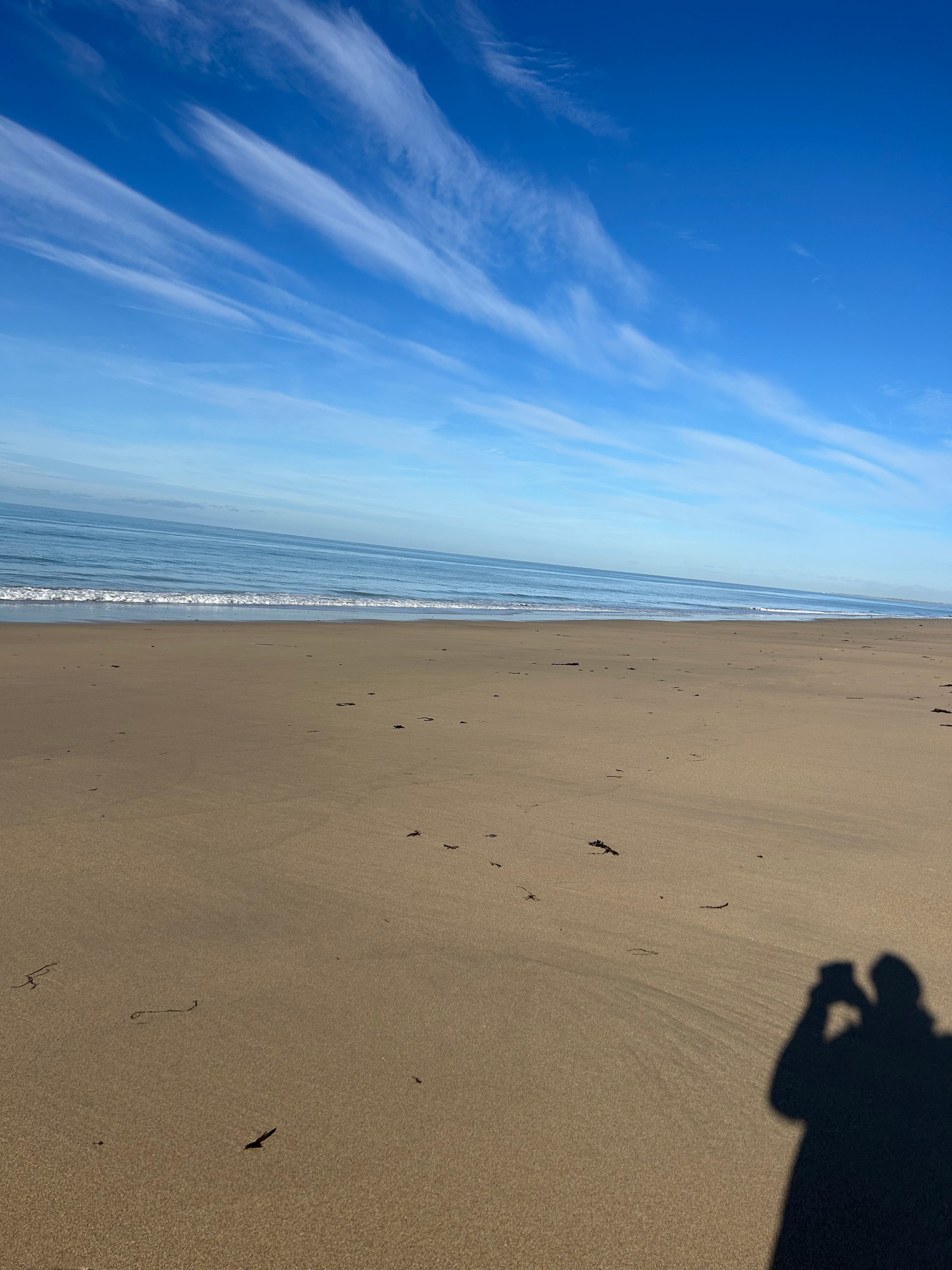
The birds scuttle to the shoreline as the tide goes out and leaves the sand smooth and shining. Bubbles coming from holes in the sand where lugworms in their burrows leave their little coils of sand on the beach and wait for the water to come back so they can eat.
Salt water purifies and feeds the world. We are water and salt. Every other day or so I do a yoga practice called Jal Neti, it involves pouring warm salty water into one nostril, tilting the head over the sink so that it flows out of the other nostril. It is good for keeping the sinuses clean and for clearing the eustachian tubes that connect the middle ear to the back of the nose and throat and is said to help with eyesight.
Our bodies are 70% saltwater like the Earth itself. Looking at water changes our brain wave frequency, putting us in a more meditative state. Cold water stimulates, it calms our fight or flight response, lowering cortisol and releasing feel-good hormones. So I come here to feel good. I feel instantly happier when I am just being here. Watching the world go by. I think about the future sometimes, ‘what am I going to make for lunch’ is a common thought. There is no work for me to do. Only to be and to feel and to exist. I need to be near water. My body feels at peace when it is next to water. I’ve written so much about my love for rain and here is where it comes from, where it returns to in an endless cycle. There is always the same amount of water in the universe. It changes form but it is never destroyed, never created. It is life itself.
In 1897 French physician René Quinton discovered a 98% match between our blood plasma and sea water. An interesting character who believed that seawater formed the matrix for all life and could be used as a substitute for blood. He reported an experiment in which he removed all the blood from a dog and replaced it with sterilised seawater, he reports that the dog developed an infection but went on to recover and live for another five years. I can find no evidence outside of his own report to support this. You can still buy Rene Quintons sterilised seawater in France and his books about the water of life are still available.
I am studying the seashells and learning their names in French. It is easier to learn a language if you are learning something you are interested in, and you can’t study seashells without collecting a few, in my pocket I have
Amande de Mer - Glycymeris glycymeris - Bittersweet clam
Bulot - Buccinum undatum - Whelk
Coque - Cerastoderma edule - Cockle
Coquile Saint-Jacques - Pecten Maximus - Scallop
Turritelle - Turitella comunis - Tower shell
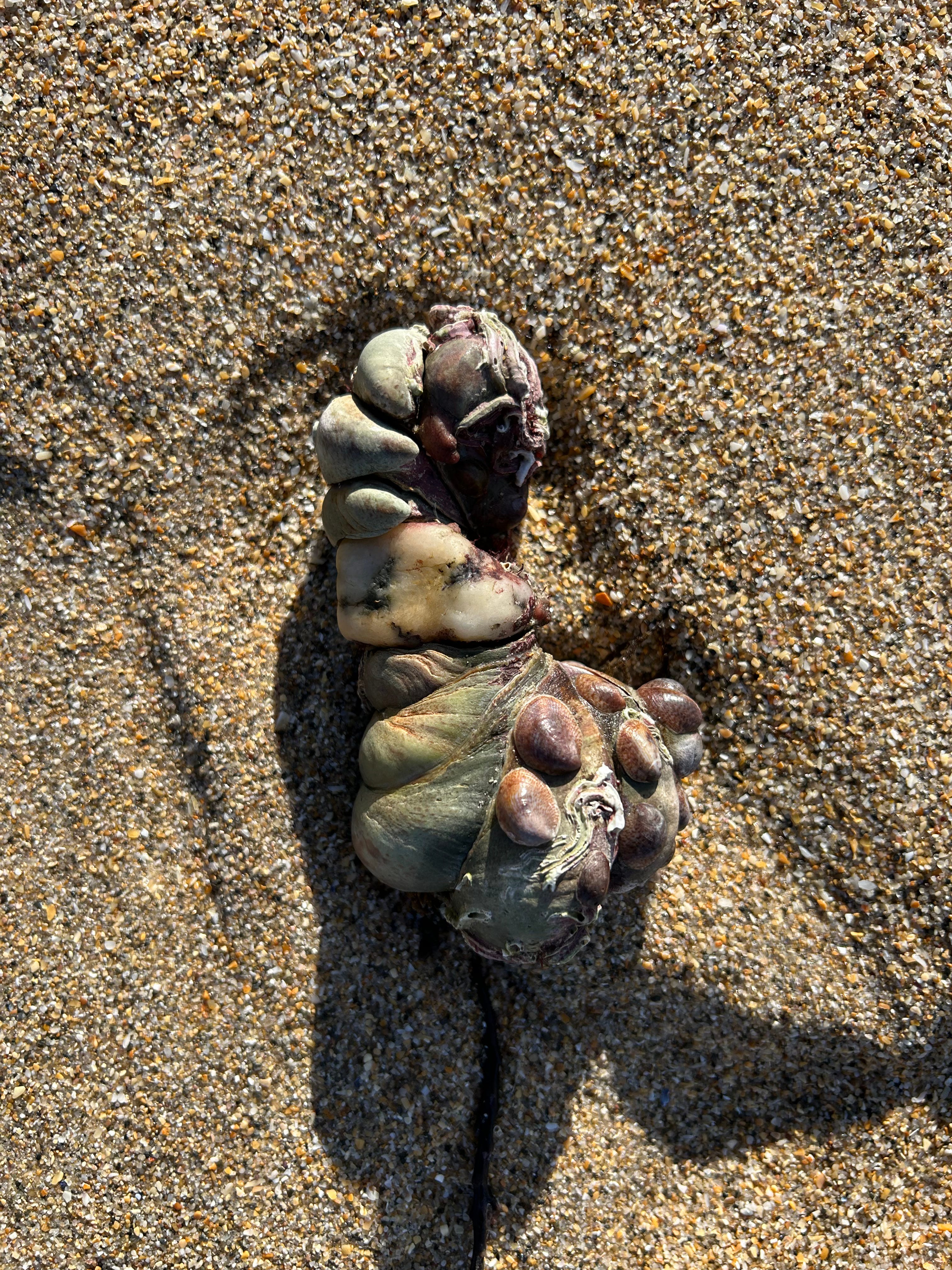
I left the horrible Crépidule - Crepidula fornicata - Slipper limpet on the beach. You usually find stacks of them stuck together, one on top of the other, apparently the larger ones at the bottom of the stack are females and the smaller younger ones on top are males. Over time as the heap grows and the males find themselves closer to the bottom, they become females. What I don’t like about them is the way they stack on top of each other, they look too sociable, tribal, cannibalistic, they look naked, like a never ending orgy. When you accidentally stand on them in bare feet their thin chalky shells crush and they ooze slime. Also they look like giant toenails. I avoid touching them.
The prettiest is the turritelle, little pointed spirals about an inch long, the only one that isn’t usually eaten by humans. I take the shells, home, put them on the mantel piece and teach their names to Petite Fille. I used to have flowers on my desk, when I had a garden, now I have seashells and driftwood.
This is not a very touristy beach, there is no entertainment here for children. This is a beach for people who do not require man made entertainment, mostly adults and locals. It is not featured on the tourist maps. We swim. When it isn’t too cold we sit around like seals. We watch the tractors drive out into the sea to launch the flat aluminium boats that gather the mussels (moules) that grow on ropes under the water.
On a Spring tide as the water recedes, tall branches appear from the sea, slowly appearing taller until you can see where they are planted in the sand. They mark the ends of rows of heavy wooden posts with ropes strung between them thick and black with millions of growing mussels. The mussels are gathered in baskets and taken to the local restaurants to be served in big black enamelled steamers and eaten with frites. Marguerite says the seafood here is the best she has ever eaten.
The sea is warmed by the sand as the shallow tide comes in. Clear so the bottom can be seen, occasionally a fish glides by. Often there are jellyfish (méduse) but not today. Just clear and empty sea. The tide not particularly high or low.
The saltwater feels healing. Even if I’m not swimming today I like to walk in the surf. It feels good for my feet.